
What happened at Jantar Mantar on Saturday 6th June 2026 was more than just another protest. It was a moment when an entire generation discovered its collective voice.
The gathering at Jantar Mantar drew a diverse crowd spanning generations—Gen Z, Millennials, Gen X, and older observers. Yet the unmistakable center of gravity was the younger generation. They came not merely to attend a protest, but to express years of accumulated frustration, anxiety, and hope.
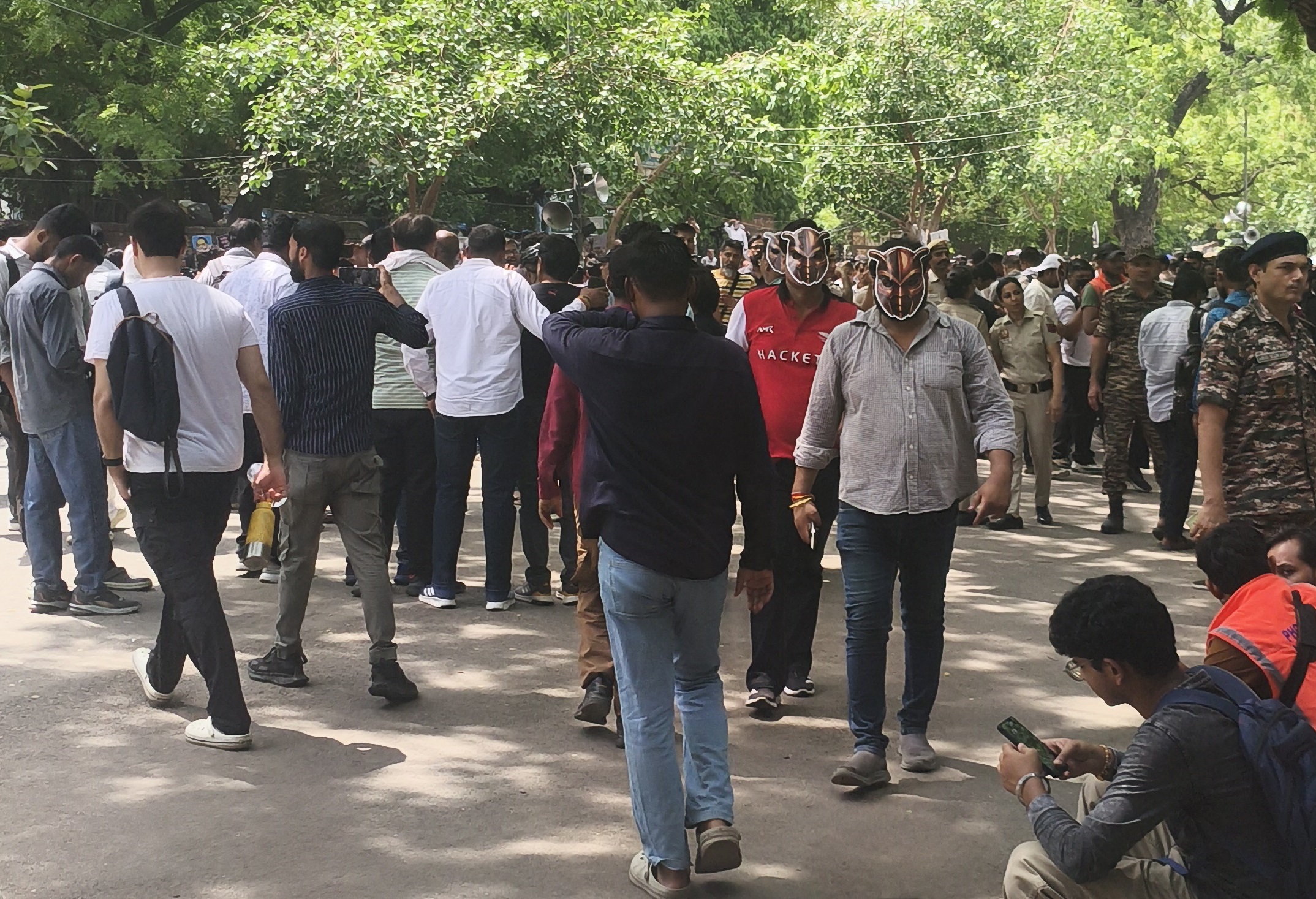
An Organic Crowd, Not a Manufactured One
When I arrived around 10 a.m., people were already streaming in. The crowd continued to grow steadily through the afternoon. Estimates varied, but what stood out was not the number itself—it was the nature of the crowd.
As one old observer said, “these were not people brought in by paid campaigns. They came on their own. Paying their travel expense in this scorching summer in Delhi.” They came carrying their own concerns, their own stories, and their own reasons for being there.
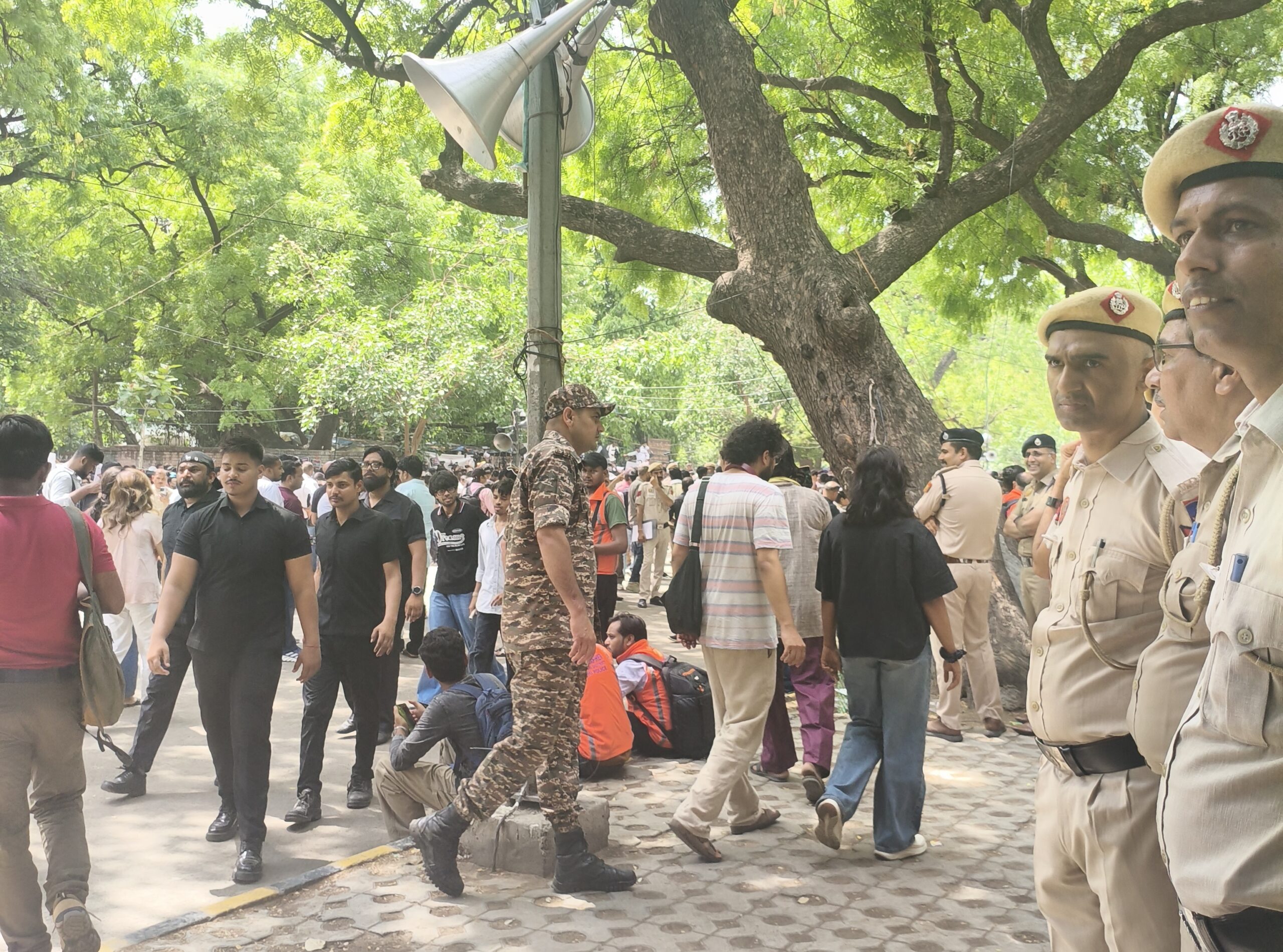
Students worried about competitive examinations such as NEET. Young graduates anxious about employment opportunities. Others concerned about broader social issues, inequality, and governance. Each person had a different grievance, but they shared a common belief: remaining silent was no longer an option.
A Protest Unlike Any Other
In decades pf attending public events, I had never witnessed a gathering quite like this one.
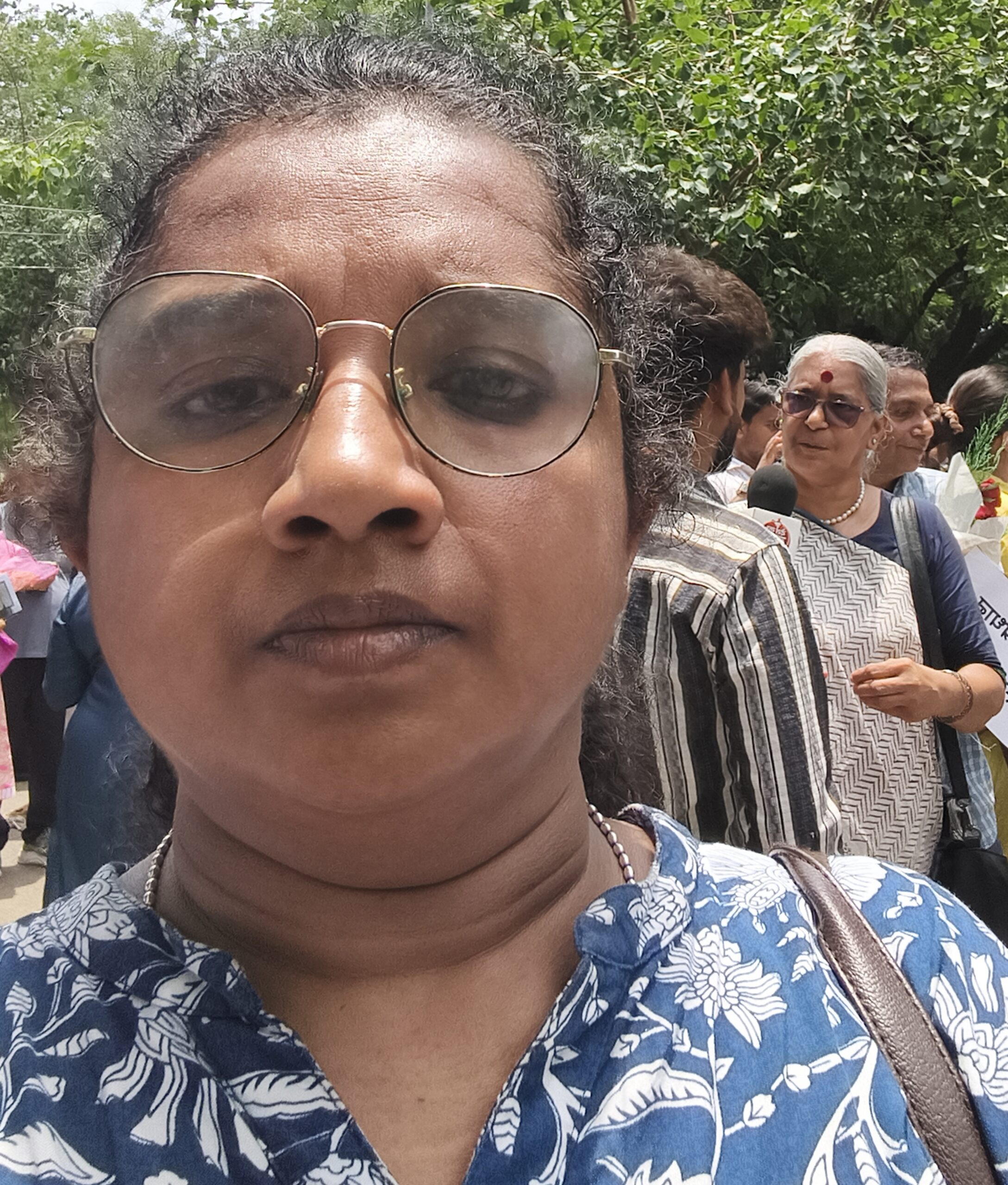
There was no rigid script. No tightly controlled messaging. No elaborate stage management.
Instead, there was an open atmosphere where anyone could express their views. Young people spoke freely to journalists, YouTubers, independent media creators, and fellow protesters. The gathering became a public forum where frustrations that had been building for years finally found an outlet.
The slogans themselves reflected this spontaneity. They were not always centrally coordinated or rehearsed. Sometimes a phrase shouted by one group would instantly become a slogan echoed by hundreds. The protest felt alive, evolving in real time rather than following a predetermined script.
The Discipline That Stood Out
Perhaps the most remarkable feature of the gathering was its discipline.
India is no stranger to large crowds, and public gatherings often involve pushing, jostling, and confusion. Yet yesterday felt different.
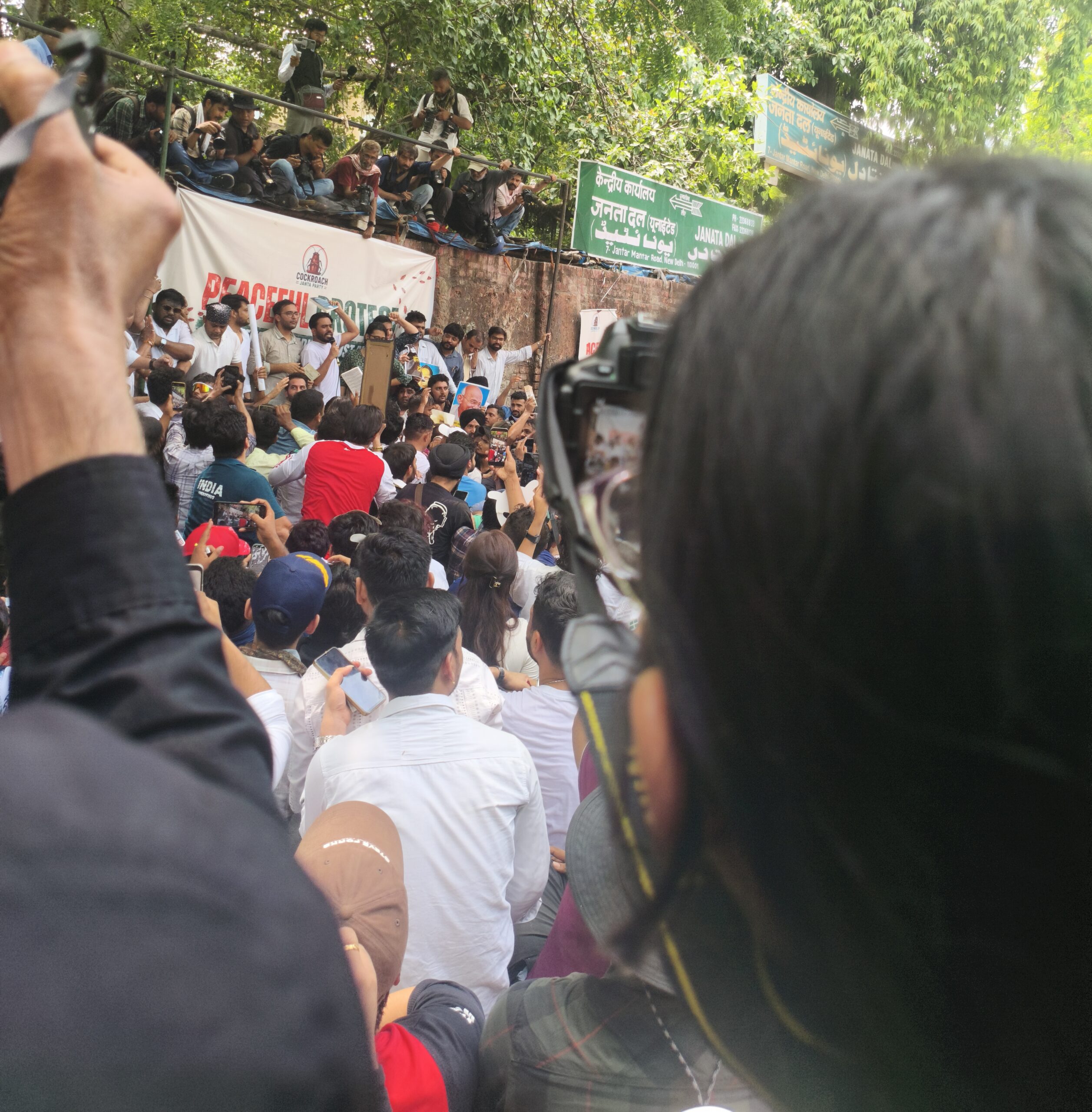
People made space for one another. When media personnel blocked views, slogans emerged asking them to move back. When visibility became an issue, participants coordinated among themselves without confrontation. Those seated in front remained seated; those recording stood behind. There was a shared understanding that everyone deserved a place in the movement.
The crowd was large, but it was also remarkably self-regulating.
More Than a jantar mantar protest—A Political Awakening
The most significant takeaway from the day was not any individual speech or slogan. It was the realization that many young people are beginning to see themselves as active participants in democracy.
For years, a common sentiment among young Indians has been political disengagement: “Why should politics concern us?”
Yesterday suggested a shift.
The young participants were not merely reacting to immediate issues. They were discussing democratic rights, accountability, public institutions, corporate influence, and governance. They were asking difficult questions and demanding answers. They were no longer content to remain observers.
Many of the placards appeared homemade and authentic. The concerns were varied, but they all pointed toward a common desire for change.
The message was simple: If we do not speak now, when will we?
The Role of Older Generations
Gen X and Millennial attendees largely played a different role.
Many were there as observers, supporters, and protectors. They watched with interest as younger protesters took center stage. Some compared the gathering to earlier moments in India’s political history—the JP movement of the 1970s and the Anna Hazare movement of the early 2010s.
Such comparisons are inevitable. Every generation looks for historical parallels when confronted with something new.
Yet history also offers cautionary lessons. As one person who attended both the JP and Anna Hazare movement said “Major protests often produce leaders, movements, and political transformations—but not always in the ways participants initially imagine.”
Several older attendees acknowledged this uncertainty. The future trajectory of this movement remains unclear.
Enduring the Heat
Another striking aspect was the sheer endurance displayed by participants.
The jantar mantar protest took place under Delhi’s harsh summer conditions. Water was limited. Temperatures were unforgiving. Yet people remained for hours.
Organizers and supporters had encouraged participants to arrive well-fed and hydrated. Many followed that advice. Even as the heat intensified, the crowd continued to hold its ground.
Their persistence suggested that they were motivated by something deeper than spectacle. They had come because the issues being discussed affected their lives directly.
Challenges on the Ground
The event was not without difficulties.
Internet connectivity was poor, making communication and live reporting difficult. Independent media creators had to improvise ways to publish updates. Sound systems were inadequate, creating problems for speakers and participants alike. Ironically, official announcements often seemed to have better audio equipment than the Cockroach Janata Party protest itself.
Yet despite these obstacles, information continued to flow, and the gathering continued to function.
What Happens Next?
That is the question everyone is asking.
History tells us that large public movements can either transform society or dissipate without achieving their goals. The answer often depends on leadership, organization, and the ability to convert energy into sustained action.
Yesterday’s gathering clearly demonstrated energy.
It demonstrated frustration.
It demonstrated solidarity.
Most importantly, it demonstrated that a generation often accused of being politically indifferent is beginning to engage with public life in a serious way.
Whether this becomes a defining moment or simply a memorable day remains to be seen.
A Moment Worth Remembering
As I left, one impression stayed with me.
This was not merely a protest about examinations, jobs, or individual grievances. It was about participation. It was about young people discovering that they have both the right and the responsibility to shape the future they will inherit.
For many in attendance, yesterday may have been the first time they experienced the power of collective expression.
A veteran leader said that the Government understood the sentiments hence they allowed the protestors timing from Morning 10:00 to 5:00 PM. Usually they allow no more than 2 hours for protests.
And perhaps that is why the event mattered.
Not because of how many people attended.
Not because of who spoke.
But because a generation that had long been silent decided it was finally time to be heard.
Kadıköy Acil Su Kaçağı Tespiti Mutfak dolabının altında su birikmesi vardı, korkmuştum. Meğer musluk bağlantısıymış. Ufak bir işlemle hallettiler. https://www.hairybollocksstud.com/
You’re so awesome! I don’t believe I have read a single thing like that before. So great to find someone with some original thoughts on this topic. Really.. thank you for starting this up. This website is something that is needed on the internet, someone with a little originality!
I really like reading through a post that can make men and women think. Also, thank you for allowing me to comment!